
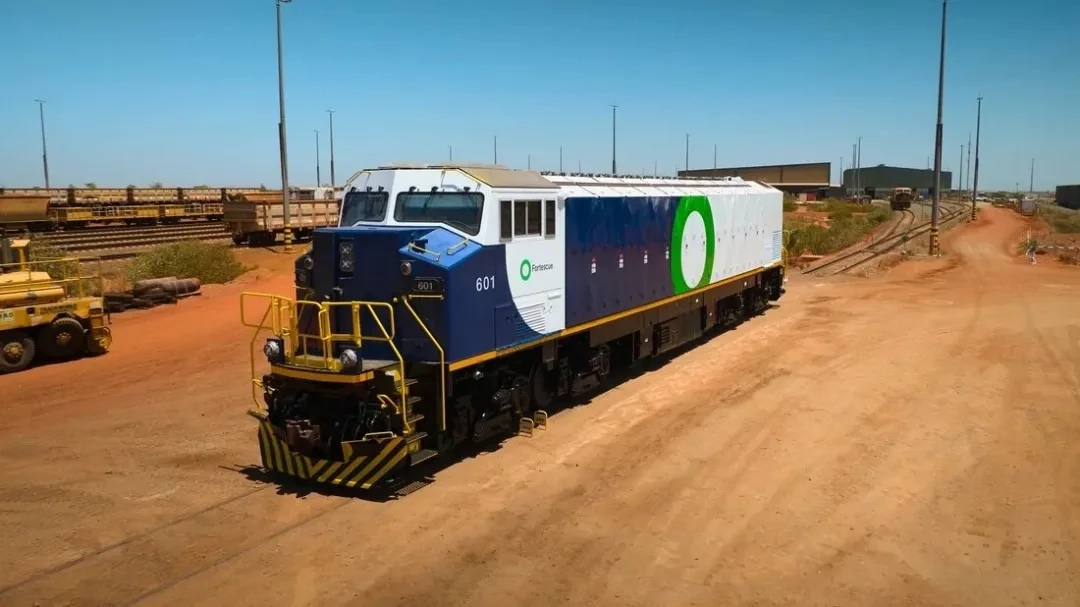
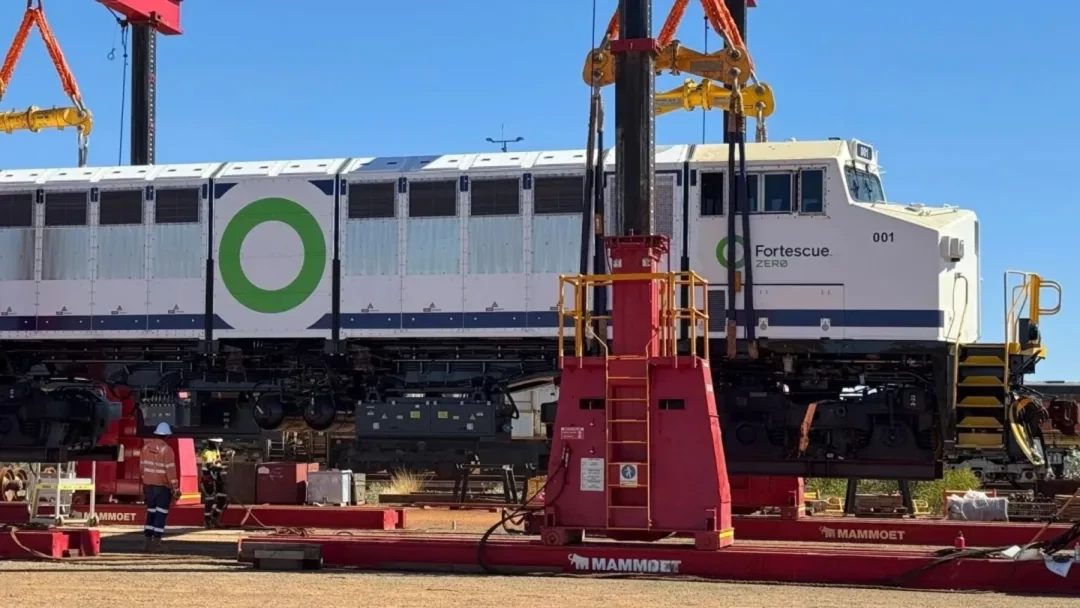
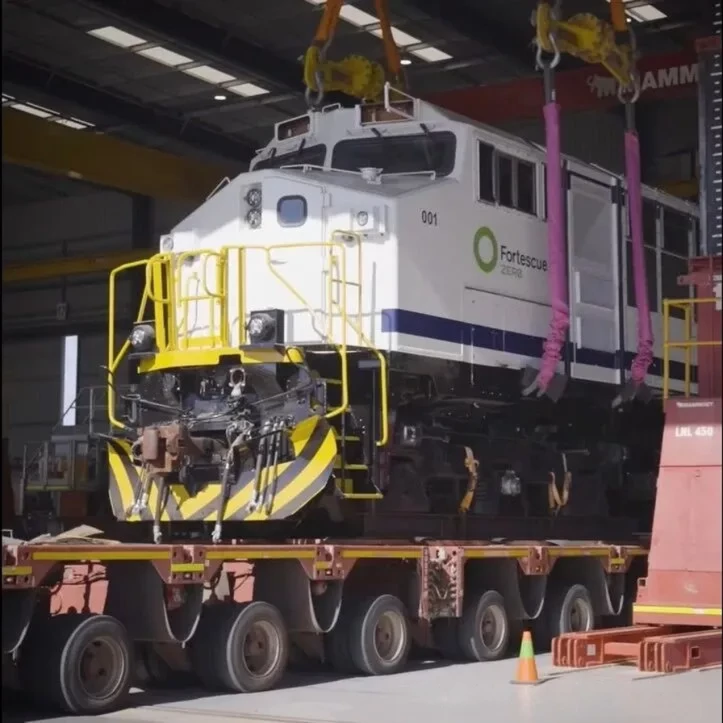
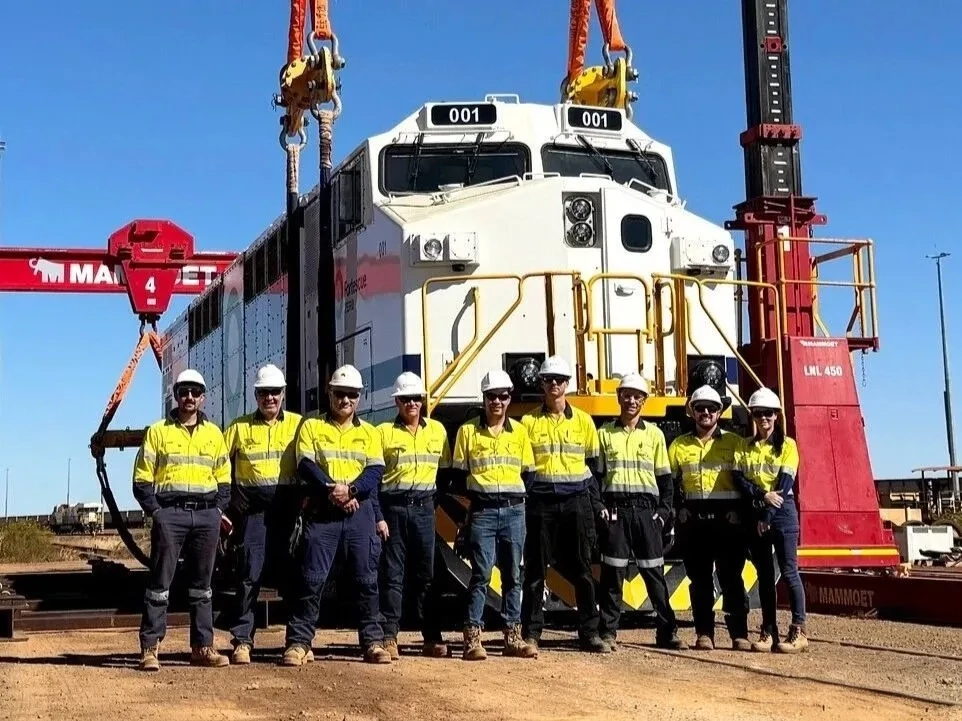
Fortescue has commenced commissioning of two new battery-electric locomotives for its rail network, marking a significant milestone in the company’s decarbonization efforts in its Pilbara iron ore operations. Delivered by Caterpillar’s Progress Rail, the two locomotives will collectively reduce diesel consumption by approximately 1 million liters annually once operational.
Each locomotive is equipped with the world’s largest land-based mobile battery, with a single unit capacity of 14.5 megawatt-hours, and can recover 40% to 60% of its energy through a regenerative braking system. The locomotives will operate using renewable energy provided by Fortescue’s Pilbara Energy Interconnection program.
Fortescue Metals & Operations CEO Dino Otranto stated, “The core of true zero emissions lies in a radical transformation of asset energy supply, material transport, and operational models—not offsetting emissions, but fundamentally eliminating them. Decarbonizing the railway network is a key element in achieving this goal, and this battery-electric locomotive commissioning proves that heavy-haul railways can operate reliably without fossil fuels.”
He added, “For mining operations of this scale, decarbonization must be built on a stable and reliable supply of renewable energy around the clock. This is precisely why we built an integrated system—integrating large-scale solar and wind power, battery storage, and transmission infrastructure. Through the Pilbara Energy Interconnection Project, we have built over 480 kilometers of high-voltage transmission lines, physically connecting energy assets, operational facilities, and the railway network. This infrastructure can replace diesel and natural gas consumption in the Pilbara region in real time.”
Progress “Our partnership with Fortescue proves that when two organizations work together to advance the future of rail, anything is possible,” said John Newman, President and CEO of Rail. “We are proud to provide rail solutions that help our customers tackle their toughest challenges and to continue delivering products that enhance the security, reliability, and sustainability of rail networks.”
At the North Star hub, Fortescue has already commissioned a 100 MW solar power plant, complemented by a recently installed 250 MWh battery storage system that can provide 50 MW of power for five consecutive hours, playing a key role in stabilizing the supply of renewable energy.
Building on its existing photovoltaic portfolio, Fortescue’s 190 MW Cloudbrake solar power plant is approximately two-thirds complete. The company has also received all initial approvals for the 644 MW Turner River solar power plant, with construction expected to begin this year; in addition, the 440 MW Solomon solar power plant is included in the near-term plans. These projects will expand Fortescue’s renewable energy footprint in the Pilbara region, contributing to achieving its goal of truly net-zero emissions.
Gus Pischott, CEO of Growth and Energy at Fortescue, stated, “Battery storage is the backbone of renewable energy mining systems. By integrating Fortescue Zero’s Elicia Battery Smart Management software, we are able to optimize performance, extend battery life, and intelligently balance grid-wide energy distribution in real time. This technology ensures that power is deployed appropriately at the right time, whether supporting rail operations, smoothing solar output, or maximizing the value of energy storage.”
Fortescue stated that its expanding portfolio of solar, wind, battery storage, and electrified transmission infrastructure represents the most comprehensive decarbonization plan in the global mining sector. Other decarbonization milestones in the Pilbara region include: the commencement of the first wind power project, Nabrawind; expansion of mining electrical equipment – with one electric drilling rig and 12 electric excavators deployed at multiple existing sites; a strategic global partner network covering solar, wind, energy storage, and heavy equipment electrification to support large-scale deployment; and investments in next-generation renewable energy technologies, including the acquisition of Nabrawind to support future Pilbara wind projects.
Fortescue’s climate transition plan outlines a path to achieving true net-zero emissions, committing to eliminating Scope 1 and Scope 2 emissions from its Australian onshore iron ore operations by the end of 2030.


